The Turin Shroud, reputed to be the burial cloth of Jesus Christ, and also the bearer of his blooded imprint, was carbon dated in 1988 to having been made between 1260 and 1390 AD. So it's too young to be the burial cloth of Jesus. This has not stopped persons from trying to prove the cloth is older than that.
It is important to know that nobody making huge dramatic claims of authenticity has access to the full shroud. Conclusions are based on images, photographs, cleaned fibres, a few swabs, and so on.
Josh McDowell wrote,
Reports are being circulated of a coin over the right eye
that dates back to the years of A.D. 29–32. The Reverend Francis L. Philas,
Professor of Theology at
THE COINS
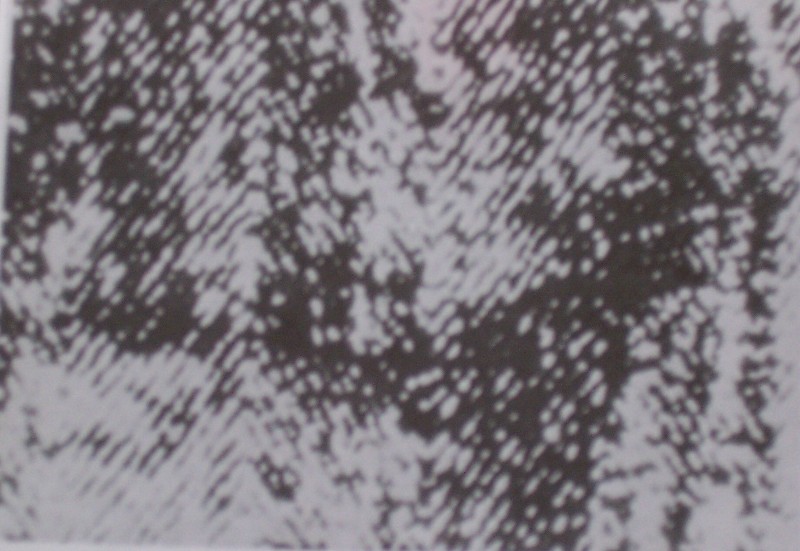
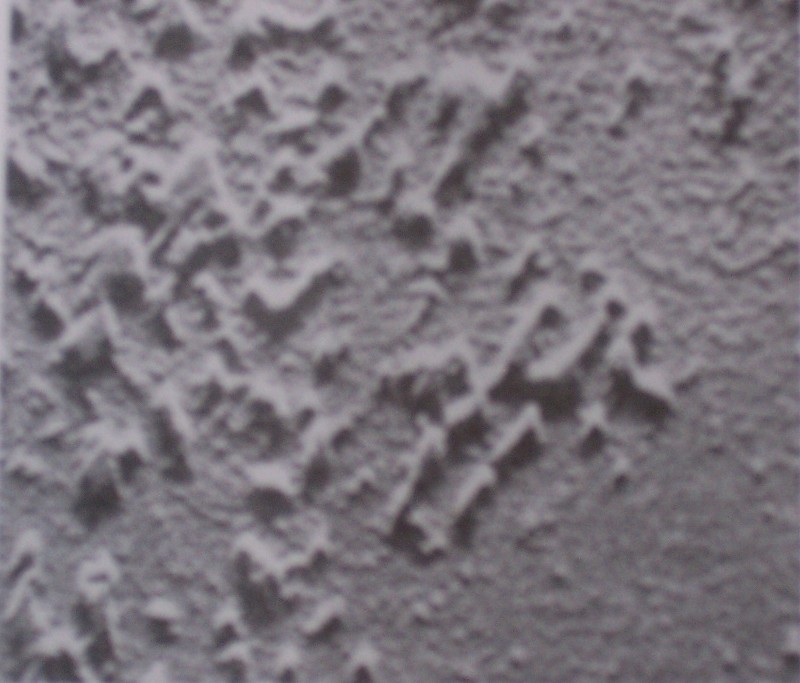
IT IS IMAGINED THAT THE COIN SHOWN ABOVE LEFT A MARK ON THE EYELID ON THE CLOTH! THE THIRD PICTURE IS A THREE-D SHOT OF THE REGION ON THE CLOTH THAT ALLEGEDLY BACKS THIS UP!
A professor from Loyola University in Chicago, Francis L. Filas, said that the imprint left by coins can be seen on the Shroud’s eyes. They were supposedly put on to keep his eyes shut.
This claim has forced objective researchers to waste time on refuting it.
The coins are called leptons and were minted by Pilate at the time of Jesus' ministry
Would leptons have been used for Pilate killed Jesus? Maybe not!
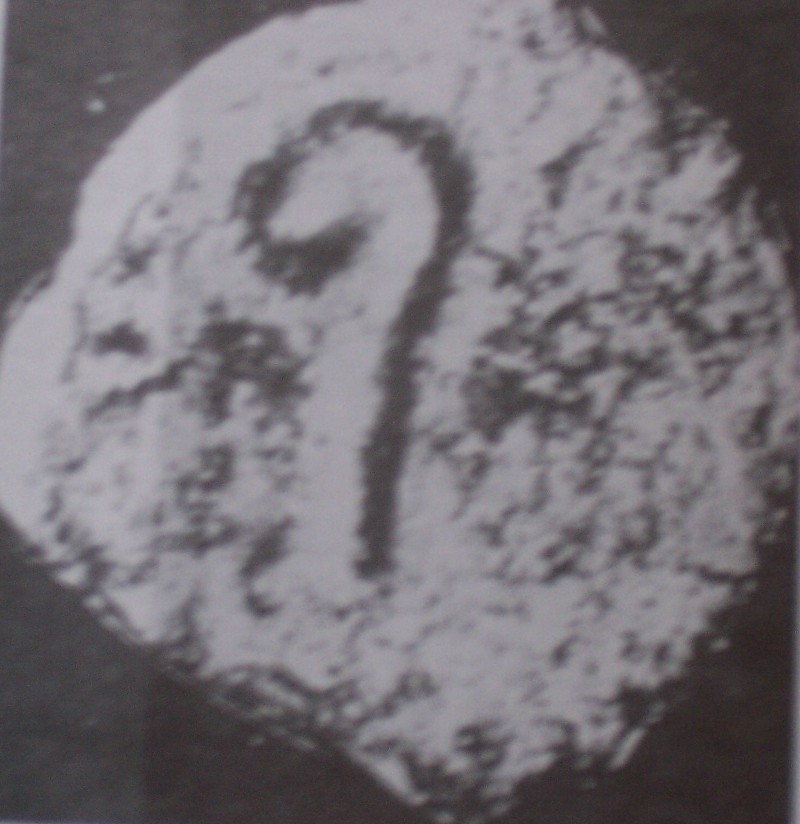
The right eye is supposed to show a staff like a bishops crook with letters around it and the roughly roundish shape of the coin on the eye. No coin is going to sit perfectly flat on the eye. The suggestion that the shape is on the eye if the coins were taken off when the man was laid out. Do you really think that coins are that good at leaving indents on the skin?
If the mark fits the coin then it is not a coin but just something that people think they can see a coin shape in. We do see patterns where there are none, but this takes that to another level of foolishness.
The book, Verdict on the Shroud, says that the man may have been buried with coins on the eyelids. How could the image of the coins transfer to the cloth when the image was caused by the body and by the blood? We would expect to see clean roundish patches on the eyes. But it is probable that burying people with coins on their eyes was not done in the first century (Biblical Exegesis and Church Doctrine, page 151). Flat stones were used when necessary.
The head of Pilate, can according to some, can be allegedly be seen from a coin on the right eyelid of the Shroud man. The cloth has a roughish surface too which causes too much distortion to justify the claim about the coins.
Some try to make out they can see the following coin on the shroud but it should be too detailed and small to leave any clear print.
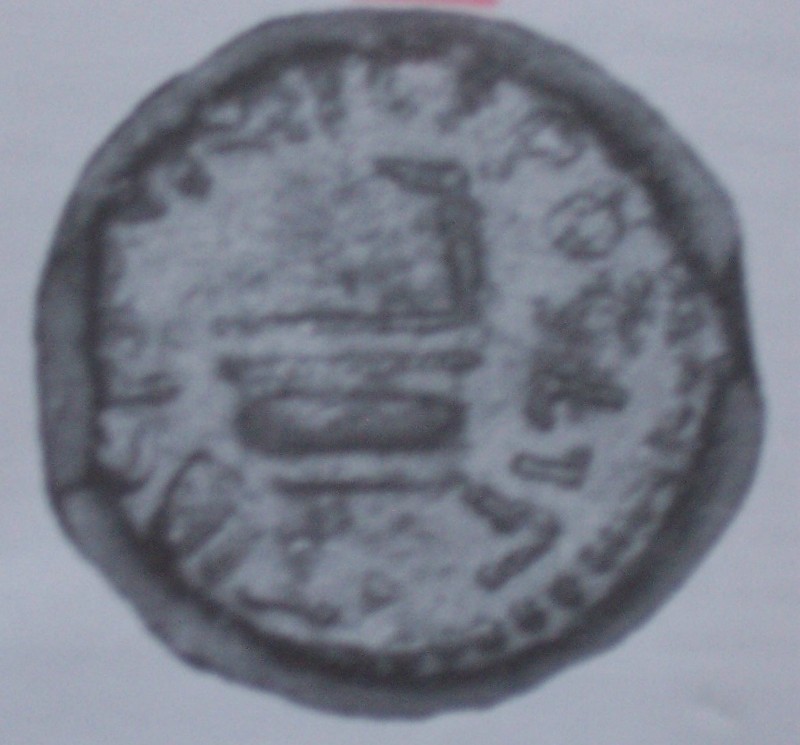
Filas studied 3-D images of the eyelids and though he could read UCAI from Tiberius Caisaros which was inscribed on coins in those days (page 19). But when you look at the pictures you see you can imagine other letters that were not on these coins just as clearly. They are all in the mind. Good researchers and even the pro-Shroud STURP insist that the coins are imagined (page 19, Turin Shroud by Ian Wilson).
Jesus would have died with his eyes closed because the blood would have been running into them from the crown of thorn. There was no need for anything on the lids to keep them shut. He would have closed his eyes on passing gradually into a coma before death.
A pro-shroud source says the fibres are too "coarse to resolve the rather subtle and very tiny inscription on a dime sized ancient coin. I believe the fibers are much too large to resolve such fine detail. Also, Filas found these coin "images" on the Shroud using the 1933 Enrie photographs. He personally mentioned to me that he could not achieve the same results with the 1978 photographs. Unfortunately, the 1933 photographs have been copied and recopied multiple times and I believe the 'images' he discovered are artifacts of clumped photographic grain, caused by the recopying and enhancement of grain structure from earlier generation photographs. This grain clumping is very common on high contrast or contrast enhanced films when copied over multiple generations.
Filas' research described a large number of points of congruence between the coin image he found on the Shroud and the actual coin. I believe one would get matching points of congruence for practically anything one looked for, since a highly magnified random sampling of clumped grain structure would have the same effect as a sky full of clouds: you could see whatever you wish to see, and no two people would necessarily see the same thing."
By the way the Enrie photographs were useless as a guide - they were poor quality and over-copied.
FINALLY
The numismatist Mel Wacks in The Handbook of
Biblical Numismatics argued: “The coin image … Could not possibly
have been made by a coin issued by Pontius Pilate.”
amuseum.org
The claim that the misspelling “UCAI” is matched between the coin and the imprint is contested: how certain is the imprint reading? How secure is the coin-type linkage?
Since the images are extremely faint and many enhancements/overlays have been used, critics argue the match might be subject to “seeing what one wants to see” (pareidolia) and confirmatory bias.
Image enhancement & filtering: Many of the
coin‐claims are based on enhancement of photographic negatives
(e.g., the 1931 Enrie negative) and overlay comparisons. The process
of stretching, filtering, contrast-boosting can create artefacts.
theshroudofturin.blogspot.com
Weave, texture, fold artefacts: The cloth’s weave, fold creases,
tertiar-folding, light/shadow variations can produce shapes that
look like letters, circles, coins but may be just texture artefacts.
The critical study pointed to “protuberances in the yarn” and
negative texture as likely causes.
Wikipedia
Scale & clarity: The claimed coin image is very small and faint. It
is arguably below the limit at which one could reliably identify
specific letters or coin types from a linen contact imprint. The
numismatic critique emphasises that the match is not convincingly
clear.
amuseum.org