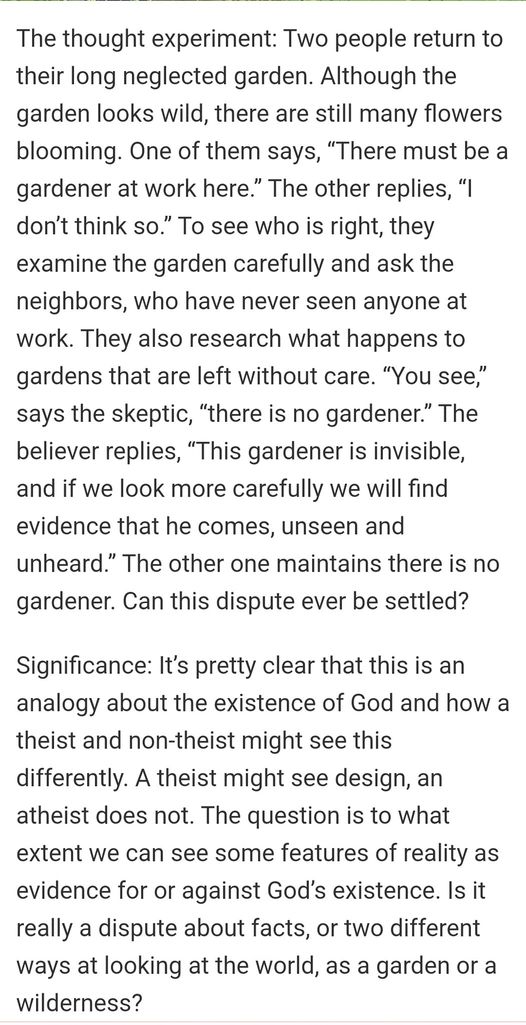
Some might argue, “If you examine a masterpiece by Da Vinci up close, it may appear chaotic, but stepping back reveals the underlying order. Similarly, the universe could appear messy while actually being designed. A structure can be intentionally made to look chaotic.” Others suggest multiple dimensions or universes could exist, interconnected in ways we cannot perceive. What appears as disorder in our perspective might not be disorder at all when viewed from another dimension or context. Even within our universe, a jagged mountain peak may seem irregular until seen as part of a harmonious whole.
The point is that we cannot be certain that apparent chaos is truly chaotic. Our perspective is limited, and relying on it to assert design requires assuming we understand the full picture. This is a significant assumption, and one that may be too great to justify affirming a designing power.
Some argue that chaos “only seems chaotic” and that apparent disorder is compatible with design. However, this assumes the conclusion—design—before examining the evidence. Proper reasoning requires observing what exists first, then forming explanations. Science often shows that many phenomena are genuinely random or unregulated.
Even essential elements, such as oxygen, demonstrate this complexity. Oxygen is vital for life, yet it is also toxic and contributes to harm over time. If a designer were responsible, these harmful effects would suggest errors, improvisation, or limitations. A designer, if proved, would not automatically indicate a perfectly loving or wise being. Traditional narratives, such as Adam and Eve, attribute harm and moral failings to human action. Yet natural processes, like the toxicity of oxygen, create challenges and competition that shape survival and behavior, independent of moral concepts.
Critics of divine design also question why, if God is an all-wise designer, events like the death and resurrection of Jesus occurred. The Church teaches that Jesus’ death was intentional, not a failure corrected afterward.
Skepticism toward miracles is not necessarily disbelief in the supernatural itself but often reflects caution regarding witness reliability. Miracles frequently require trust in testimony rather than direct evidence. The scarcity of verifiable evidence, or the reluctance of miracles to be documented, makes them difficult to accept objectively. Even if video evidence existed, human nature often remains skeptical; the challenge lies in the clarity and accessibility of the evidence itself.